
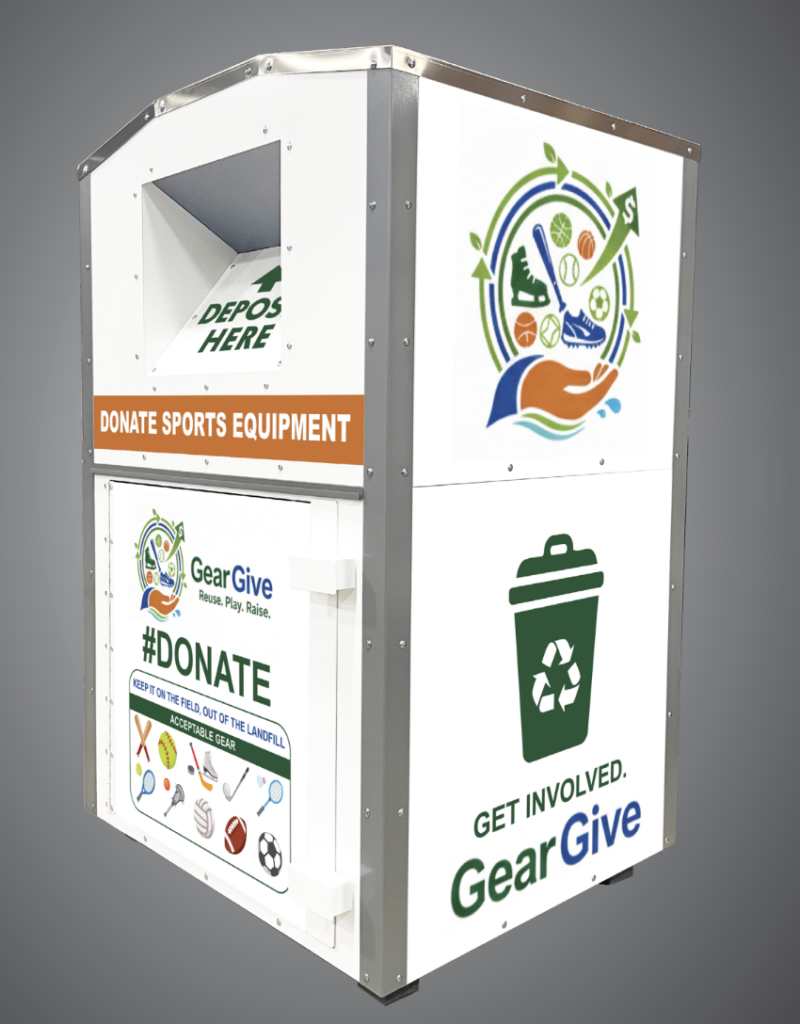
Why Municipalities Should Place Sports Equipment Collection Bins in Their Communities
Municipalities are under constant pressure to do more with less: reduce waste, improve resident services, support sustainability goals, and find creative ways to strengthen local budgets. One overlooked opportunity can help on all four fronts: placing sports equipment collection bins in convenient community locations.
For towns, counties, and park systems, a sports equipment collection bin is more than just a drop-off point. It is a practical recycling and reuse solution that gives residents an easy way to keep usable gear out of the trash, supports a more circular local economy, and can create a new revenue stream for municipal priorities. EPA’s waste hierarchy prioritizes source reduction and reuse ahead of disposal, and emphasizes reducing, reusing, and recycling as the most environmentally preferred strategies.
A Convenient Recycling Option for Residents
One of the biggest challenges in community recycling is convenience. Residents are far more likely to participate when collection options are simple, visible, and built into places they already visit. SMART, the association representing the secondary materials and recycled textiles industry, emphasizes that collection bins work best when they provide a convenient and accessible option for the public and are placed where people shop, work, or play.
That same logic applies to used sports equipment. Families often accumulate outgrown or unused baseball gloves, lacrosse sticks, tennis racquets, hockey gear, soccer cleats, and other equipment. Even when those items still have value, many residents do not know where to bring them. A municipal collection bin located at a recreation center, park, ballfield, ice rink, public works yard, or community center gives residents a clear and convenient answer.
Instead of letting gear sit in basements, garages, or eventually end up in the trash, municipalities can offer an easy path to reuse and recycling right in the community.
Diverting Valuable Materials from the Landfill
Municipal leaders are increasingly focused on diversion, sustainability, and reducing disposal costs. EPA states that reducing and reusing materials helps reduce waste sent to landfills and incinerators, while sustainable materials management focuses on using and reusing materials more productively across their life cycles.
SMART makes a similar case for collection bins, arguing that well-managed bins provide critical infrastructure for waste reduction by making donation and recycling more accessible, which helps divert recoverable materials from landfill disposal. SMART also says properly managed collection bins can help local governments reduce landfill tipping fees by decreasing the volume of materials sent for disposal.
Sports equipment may not fit neatly into a traditional curbside recycling program, but much of it can still be reused, repurposed, or responsibly handled through a dedicated collection system. For municipalities pursuing zero-waste, circular economy, or broader sustainability goals, sports equipment bins can become a visible and practical part of that strategy.
Turning Recycling into Revenue for Municipal Budgets
Municipal recycling programs are usually viewed as a cost center. Sports equipment collection bins create an opportunity to think differently.
With the right partner, municipalities can receive a share of resale proceeds from collected items. That means equipment residents no longer need can be converted into funding for recreation departments, parks improvements, youth scholarships, field maintenance, sustainability initiatives, or other local budget priorities.
SMART notes that collection bin programs can generate economic benefits and, in many cases, revenue-sharing support for community organizations, while also helping local governments control disposal-related costs.
That combination is powerful: less waste, more reuse, and a financial return tied to community participation.
A Program Residents Can Feel Good About
A sports equipment collection bin is an easy program for residents to understand and support. It is tangible, visible, and mission-driven. Instead of asking households to spend more money, municipalities can invite them to donate items they already have.
That message resonates especially well in family-oriented communities where youth sports participation is high. Parents know how quickly kids outgrow gear. A bin program gives them a responsible way to clear space at home while helping other families, reducing waste, and benefiting the town.
It also helps municipalities tell a stronger public story around sustainability. Rather than talking about recycling only in broad terms, towns can point to a specific local initiative that makes reuse simple and accessible.
What Best Practices Matter Most for Municipal Collection Bins
For a municipal collection bin program to succeed, convenience should be matched with accountability. SMART’s guidance for collection bins consistently emphasizes transparency, written permission, maintenance standards, clear contact information, and enforcement mechanisms that address problems without undermining responsible operators.
For sports equipment collection bins, that translates into a few clear best practices:
1. Place bins in high-traffic, appropriate locations
Bins should be placed where residents already gather, such as parks, recreation centers, athletic complexes, municipal buildings, or other community destinations. SMART’s community guidance stresses that convenient collection points are essential to participation.
2. Require clear signage and transparency
Residents should be able to see who operates the bin, how to contact them, what items are accepted, and whether the program is operated by a for-profit company, nonprofit partner, or revenue-sharing arrangement. SMART specifically recommends clear identification and transparency around operator and charitable relationships.
3. Set maintenance and service expectations
A successful bin program depends on regular pickup, a clean surrounding area, timely response to complaints, and bins that remain in good condition. SMART’s position documents call for realistic maintenance requirements, regular servicing, and contact information so community concerns can be addressed quickly.
4. Align with zoning, permitting, and insurance requirements
SMART’s model guidance supports local zoning and permitting compliance, written consent for placement, and liability coverage. Municipalities can protect public spaces while still encouraging responsible collection infrastructure.
5. Focus on balanced regulation, not overregulation
SMART argues that communities should adopt balanced policies that emphasize accountability and collaboration, rather than overly restrictive rules that reduce access to convenient collection options. For municipalities, that means creating guardrails that protect residents and public property without making it impossible for responsible operators to serve the community.
Why This Fits Modern Municipal Priorities
Today’s municipalities are looking for programs that check multiple boxes at once. A sports equipment collection bin can help support:
-
resident convenience
-
landfill diversion
-
sustainability and circular economy goals
-
community engagement
-
youth sports access
-
incremental revenue for municipal needs
EPA and SMART both frame reuse and recycling infrastructure as part of a broader sustainable materials strategy that can reduce waste, conserve resources, and create economic value.
That makes sports equipment collection bins more than a niche idea. They are a practical municipal tool that can turn unused gear into measurable environmental and community benefit.
The Bottom Line
Municipalities do not need to choose between sustainability and fiscal responsibility. A well-run sports equipment collection bin program can help accomplish both.
By placing collection bins in the right locations and following proven best practices around transparency, maintenance, and community fit, towns can give residents a convenient way to recycle and reuse sports equipment, divert more material from the landfill, and generate revenue that supports local priorities.
For communities looking for a simple, visible, and resident-friendly recycling initiative, sports equipment collection bins are an idea worth putting on the ground.