
Keeping Sports Equipment Out of Landfills: Why Reusing and Donating Gear Matters
Across the United States, millions of pieces of sports equipment are thrown away every year. From baseball bats and hockey pads to tennis rackets and lacrosse sticks, youth sports generate an enormous amount of gear that often ends up in landfills.
But what many people don’t realize is that most sports equipment is extremely difficult to recycle.
That means once it’s thrown away, it may remain in a landfill for decades — or even centuries.
As youth sports participation continues to grow across regions like New Jersey and the Mid-Atlantic, keeping sporting goods in circulation instead of sending them to landfills has become an increasingly important sustainability issue.
Fortunately, there are better options.
Why Sports Equipment Is Hard to Recycle
Unlike materials like aluminum, cardboard, or glass, most sporting goods are made from complex combinations of materials, which makes recycling extremely difficult.
For example:
-
Baseball bats may contain aluminum alloys, composite carbon fiber, rubber grips, and adhesives.
-
Hockey equipment includes high-density foam, plastics, nylon fabrics, and metal hardware.
-
Lacrosse sticks combine composite shafts, plastic heads, and synthetic mesh.
-
Tennis rackets contain carbon fiber, graphite, and polymer components.
Because these materials are fused together during manufacturing, they cannot easily be separated into recyclable components.
As a result, municipal recycling programs typically do not accept sporting goods.
When equipment is thrown away, it usually goes directly to a landfill.
The Growing Waste Problem in Youth Sports
Youth sports are a massive industry in the United States.
According to industry estimates, tens of millions of children participate in organized sports each year, and participation is especially high in sports-heavy regions such as New Jersey, Pennsylvania, Maryland, and the broader Mid-Atlantic.
But participation comes with a cost:
Children grow quickly and outgrow their equipment every season.
A typical youth athlete may go through:
-
multiple baseball bats
-
several gloves
-
new helmets every few years
-
multiple sets of cleats
-
gear for different sports
Over time, this creates a significant amount of discarded equipment.
Many families simply throw old gear away when it no longer fits.
But in reality, much of that equipment still has years of usable life left.
The Environmental Cost of Landfilled Sports Gear
When sporting goods are sent to landfills, they can remain there for extremely long periods of time.
Common materials used in sports equipment include:
| Material | Estimated Decomposition Time |
|---|---|
| Plastic components | 100–500 years |
| Synthetic foam padding | Hundreds of years |
| Rubber grips and coatings | 50–80 years |
| Composite carbon fiber | Extremely slow degradation |
Because many items contain mixed materials, they rarely break down cleanly.
Instead, they slowly degrade and contribute to landfill waste and environmental pollution.
In addition, manufacturing new sporting goods requires:
-
raw materials
-
energy-intensive production
-
global shipping and logistics
Extending the life of existing equipment helps reduce both waste and carbon emissions.
Reuse Is the Most Sustainable Solution
Environmental sustainability experts often emphasize a simple hierarchy:
Reduce → Reuse → Recycle
When it comes to sporting goods, reuse is far more effective than recycling.
Reusing equipment means:
-
fewer items enter landfills
-
fewer new items need to be manufactured
-
equipment becomes accessible to more athletes
A baseball bat or glove can often last many years beyond its original owner.
In fact, many pieces of youth sports equipment remain in excellent condition even after a child outgrows them.
Keeping that gear in circulation dramatically reduces waste.
How Equipment Collection Drives Help the Environment
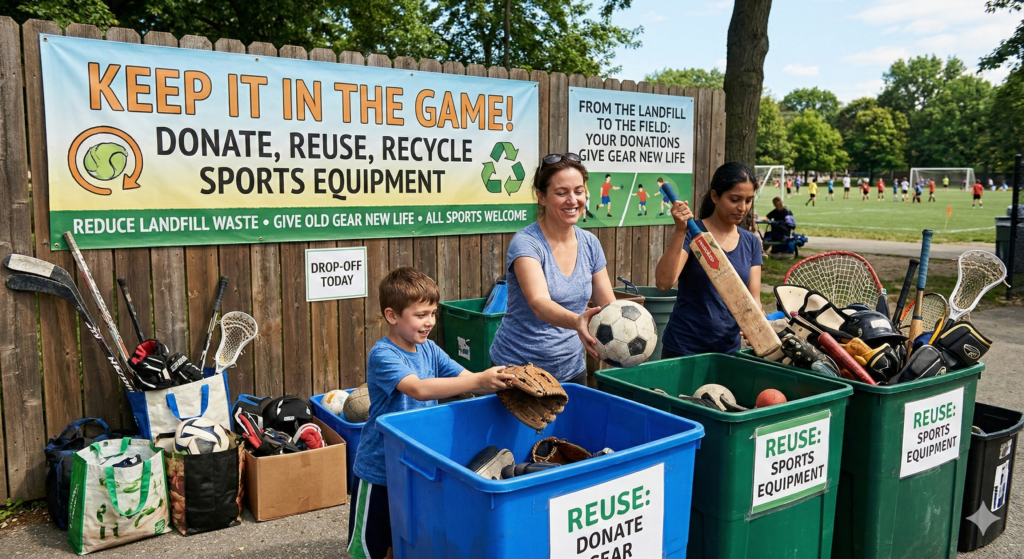
One of the most effective ways to keep sports gear out of landfills is through sports equipment collection drives.
Organizations like GearGive collect gently used sports equipment from communities and ensure that it is reused rather than discarded.
Instead of throwing equipment away, families can donate items such as:
-
baseball bats
-
gloves
-
catcher’s gear
-
lacrosse sticks
-
hockey equipment
-
tennis rackets
Once collected, this equipment can be:
-
reused by other athletes
-
resold to extend its life cycle
-
redistributed into communities that need affordable gear
This approach helps create a circular economy for sports equipment, where gear stays in use for as long as possible.
Sustainability and Youth Sports Communities
Communities across New Jersey and the Mid-Atlantic have some of the highest participation rates in youth sports in the country.
From baseball and lacrosse to hockey and tennis, thousands of families are constantly buying new equipment as their children grow.
By encouraging equipment donation and reuse, these communities can make a meaningful environmental impact.
Even small changes can make a difference.
For example:
-
A single reused baseball bat keeps aluminum and composite materials out of landfills.
-
A donated glove can give another athlete years of use.
-
A full equipment drive can divert hundreds of items from the waste stream.
Multiply that across entire leagues and communities, and the impact becomes significant.
The Hidden Environmental Value in Your Garage
Many families don’t realize how much unused equipment they have accumulated over the years.
A typical youth sports household may have:
-
several baseball bats
-
multiple gloves
-
helmets and catcher’s gear
-
equipment from other sports
Rather than throwing those items away, donating them helps extend their lifespan and reduce waste.
That simple act can help keep valuable materials in circulation instead of buried in a landfill.
Building a More Sustainable Future for Youth Sports
Youth sports bring tremendous benefits to communities.
They promote:
-
teamwork
-
physical activity
-
personal development
But they also create equipment waste that is often overlooked.
By encouraging equipment reuse and donation, sports communities can reduce that waste while making sports more accessible to the next generation of athletes.
Keeping sports gear out of landfills isn’t just good for the environment.
It’s also a powerful way to build more sustainable and inclusive youth sports communities.
Donate Used Sports Equipment Instead of Throwing It Away
If you have sports equipment sitting in your garage that is no longer being used, consider donating it instead of throwing it away.
Programs like GearGive help ensure that gently used sports gear is:
-
reused by other athletes
-
kept out of landfills
-
put back into circulation within the sports community
By donating unused equipment, you’re helping create a more sustainable future for youth sports.